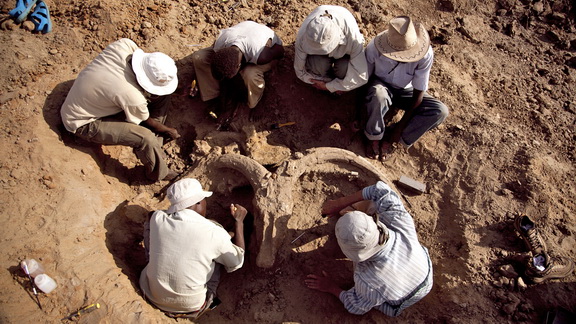
Africa, the birthplace of humanity. The womb of the first hominins. A continent rich in archaeological sites that continue to produce insights into our interminable human evolution journey. One such site is Lake Turkana. Its parks are tallied among the UNESCO’s World Heritage list. Lake Turkana has yielded fossils that include Homo habilis, Homo erectus, and four species of Australopithecus.
The National Geographic film, Bones of Turkana, implicitly rolls several documentaries into one: human evolution, Lake Turkana’s paleoanthropological history, and conservation politics among other things, all set against the legacy background of the Leakeys. Richard Leakey takes you on a Lake Turkana adventure, which is aided by other scientists around the world who also focuses their research on the Turkana Basin. The documentary also features researcher Jason Lewis; I had the distinct opportunity of studying Faunal Analysis in Archaeology under him at Rutgers University, New Brunswick.
Bones of Turkana is directed by John Heminway. I believe he did an amazing job in the film’s cinematography and story telling to visually tell the long decades of exploration at Lake Turkana. The complete film is available for online viewing below.
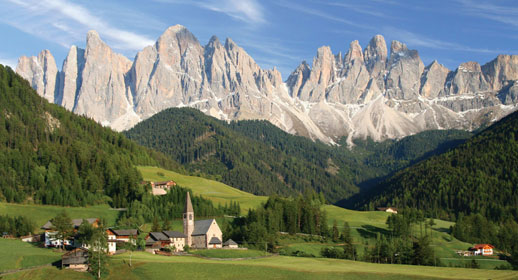
This short visual film about the geology of the beautiful Dolomites mountain range is created by Italian photographer/filmmaker Rolando Menardi. These unspoiled mountains straddle the territory of five provinces in northeastern Italy, forming part of the Southern Limestone Alps. One of its provinces, South Tyrol, is home to the South Tyrol Museum of Archaeology, where one can visit the ancient 5,000-year-old preserved Otzi, the Iceman.
“The surface of the earth is far more beautiful and far more intricate than any lifeless world. Our planet is graced by life and one quality that sets life apart is its complexity.” –Carl Sagan
The stratigraphy of the Dolomites includes Permian to Cretaceous terrains which sit on top of a Paleozoic Basement. Although the sedimentary succession ranges through these periods, the landscape is dominated by the majestic Triassic carbonates. The birth of the Dolomites can be traced back to the womb of Tethys Sea, germinating from its sediments and calcareous deposits. The Dolomites entered UNESCO’s World Heritage List in 2009.
(Bosellini et al., 2003)
This is a separate video below, depicting the scenic rich Dolomites from the South Tyrol province: