

I’m a staunch fan and advocate of free education, including the OpenCourseWare (OCW) movement, where universities publish many course lessons and relevant materials via the Internet for free. An orbit of universities joined the OpenCourseWare Consortium, which range from the University of Notre Dame OCW to MIT OCW. The concept behind OCW is to provide free and open digital educational materials to enhance human learning worldwide.
Ten years after the OCW concept germinated and slowly bloomed in the U.S., it gave birth to a newer development: Massive Open Online Course (MOOC). OCW and MOOC hold the same free education concept with the following primary differences:
- OCWs simply provide the outline, materials, and you’re essentially on your own; no communication with any professors or a classroom community like in college.
- MOOCs provide a more structured formal setting with videos, readings, problems, quizzes, assignments, and it creates an interactive community with course students and professor(s). Plus, some MOOCs offer certification for your progress.
In 2012, MIT and Harvard University merged their powers to create www.edX.org, a monumental MOOC. Over 160,000 individuals from 190+ countries signed up for Stanford’s course ‘Introduction to AI’ (artificial intelligence), who queried the course database at over 7,500 times per second. Free education is revolutionizing the face of future education. edX has even developed a pilot program to offer verified certificates of achievement to those that seek it.
“I have never let my schooling interfere with my education.” –Mark Twain
One particular MOOC is a personal favorite: Coursera.org. What is unique about Coursera is that they partner with many universities and sorta hand-pick courses that are delivered through Coursera.org. The courses are structured via weekly videos, readings, quizzes, and interaction with other course participants via discussion forums (a great place to form connections). While all this is free, what adds to the uniqueness of Coursera is that for a small fee you can earn/obtain a signed certificate from the professor that is verifiable which can be added to your CV.
While I am unsure of any employability value gained from their fee-based Signature Track option, what it might reveal to some is that the applicant is an avid learner, staying on top of their game after graduation, constantly exploring and steering their ships into new territories as opposed to staying docked in a comfortable but stagnant bay. This element alone is priceless.
“The world is a book and those who do not travel read only one page.” –St. Augustine of Hippo
One free MOOC course that is upcoming on Coursera is The Art and Archaeology of Ancient Nubia, taught by Egyptian archaeologist Peter Lacovara from Emory University. The course will explore the art, geography, culture, and archaeology of the dynamic Ancient Nubia, from the paleolithic through the neolithic, continuing until the onset of Christianity.
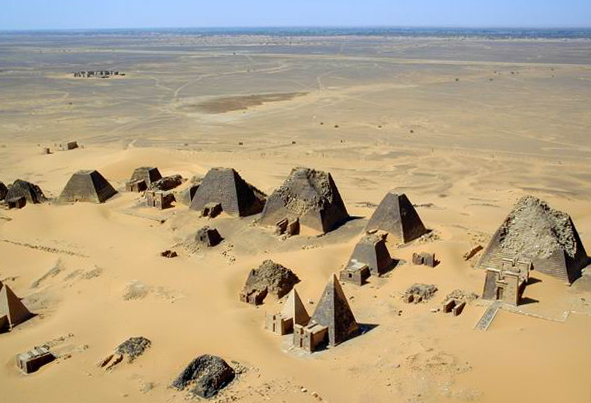
 Ancient Nubians were Africans, who were a force to be reckoned with due to their skilled use of the bow and arrow. They were an advanced civilization that rivaled their northern Egypt neighbor in power, wealth, and cultural development. For nearly a century, Nubian kings even ruled over Egypt. Ancient Nubians created fascinating art, excelled at fashioning metals, produced fine ceramics, and developed their own writing that still leave scholars stumped since there isn’t a ‘Rosetta Stone’ to help decipher early writings. Ancient Nubia is a place that has 3x more pyramids than Ancient Egypt, though none as grand as the Great Pyramids. Greeks, Romans, Egyptians – all traded with the Nubians.
The course will begin April 30th 2014 and last for eight weeks. Learn more and sign up here: The Art and Archaeology of Ancient Nubia.
